
Tangkuban Perahu & Kawah Domas: Where Legend Meets Fire in the Heart of West Java
High in the cool air of North Bandung, where pine forests whisper and the scent of sulfur lingers on the breeze, lies Tangkuban Perahu — a volcano not born of silent geological forces, but of love, betrayal, and myth. This is not just another crater. It’s a story carved into the earth.
The name means “Upturned Boat,” and from above, its wide caldera does resemble a vessel flipped by nature’s hand. But the real tale runs deeper. According to Sundanese legend, this mountain was formed when Dayang Sumbi, a beautiful princess, was unknowingly pursued in marriage by her own son, Sangkan Parakencana, after he returned from a long journey. In horror, she fled up the mountain, calling upon divine power to turn it into a vast lake to stop him. The gods answered — but only halfway. The land rose instead, forming a massive volcano, freezing the moment of tragedy into landscape.
Today, visitors stand at the edge of Ratu Crater, the main vent, where steam hisses from fumaroles like breath from the underworld. The ground is pale, cracked, and otherworldly — stained yellow with sulfur, dotted with bubbling mud pools, and veiled in mist that rolls in without warning. Boardwalks guide you safely along the rim, offering views into the crater’s depths, where acidic turquoise ponds shimmer under the sun.
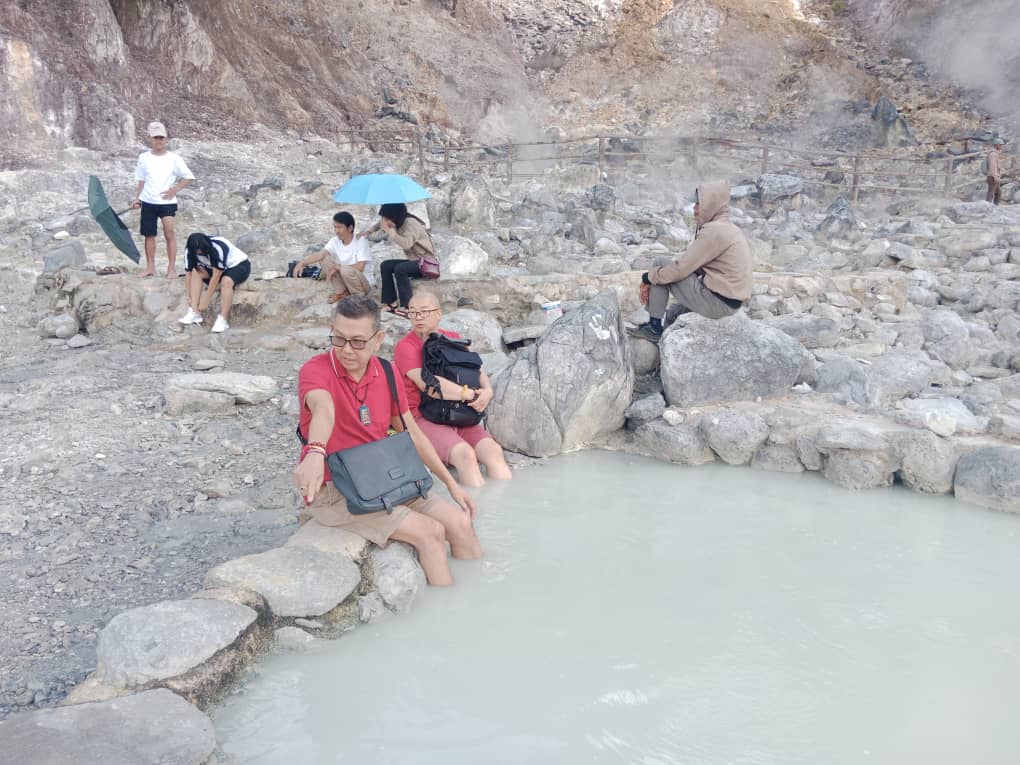
But Tangkuban Perahu isn’t one crater — it’s many. Just below the main site lies Kawah Domas, a smaller, more intimate volcanic feature that pulses with geothermal energy. Here, the earth feels alive. Hot springs bubble at surface level, their mineral-rich waters used for centuries in local healing rituals. You can feel the heat radiating through the soil, see steam rising from cracks between rocks, and witness the raw power of Java’s volcanic spine up close.
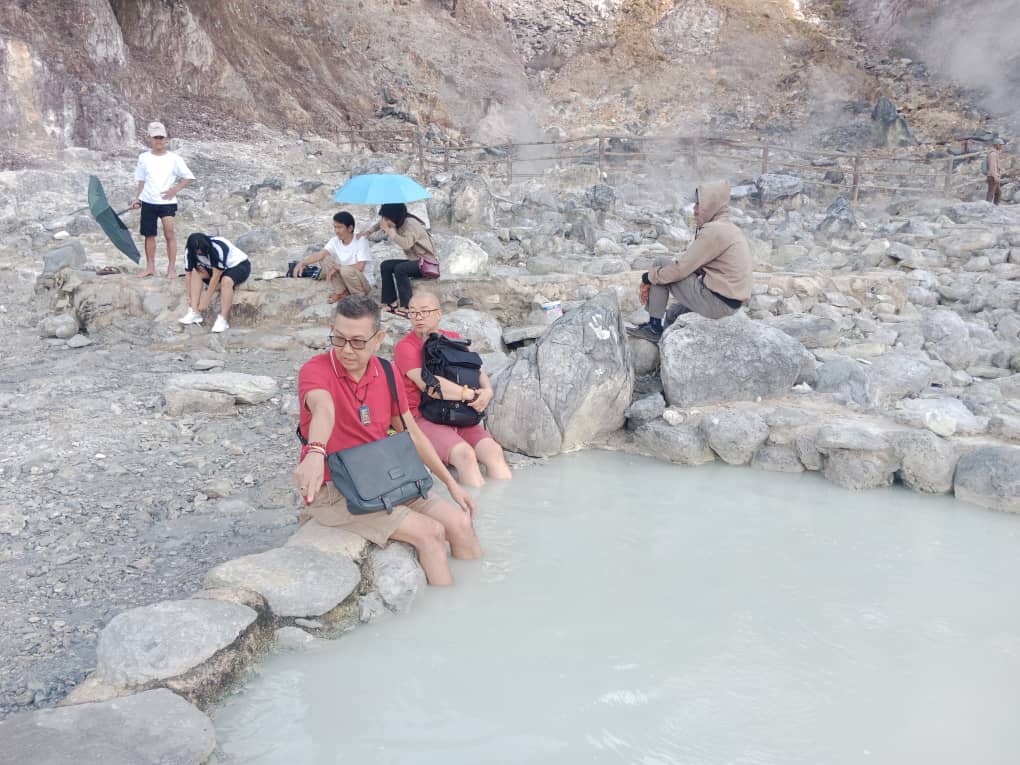
This is also where science meets tradition. GRPP (Geological Risk and Prevention Program) operates a monitoring station here, and guided tours led by English-speaking local experts offer rare insight into both the geology and cultural significance of the area. These guides aren’t just narrators — they’re custodians of knowledge, explaining how the same forces that shaped the mountain still influence life in Lembang today.
More Than a Day Trip
While many rush here for the photo op, those who slow down experience something deeper. The path down to Kawah Domas winds through a forest of eucalyptus and casuarina, cool and quiet. Locals sell boiled eggs cooked in the hot springs — a simple snack infused with the essence of the volcano itself.
And beyond the craters, there’s a rhythm to this place: farmers harvesting vegetables in highland fields, families gathering medicinal mud from the warm pools, children laughing near steaming vents (carefully watched). It’s a reminder that people don’t just visit this active system — they live alongside it, in respectful coexistence.
For hikers, there are trails leading to lesser-known vents and viewpoints. For photographers, the interplay of light, fog, and color creates endless compositions. And for anyone drawn to places where myth and reality blur, Tangkuban Perahu delivers a moment of awe — standing on ground shaped by emotion, time, and fire.
✨ Tip for visitors:
Arrive early (before 9 AM) to avoid crowds and catch the crater clear of fog. Wear sturdy shoes — the paths can be uneven and slippery. Bring a light jacket; temperatures hover around 18–20°C. If visiting Kawah Domas, consider joining a local guide for deeper context — their stories transform rock and steam into living history.
This is not passive sightseeing.
This is walking on a legend.
This is West Java, breathing.
[contact-form-7 id=”a626232″ title=”Booking Form”]


