
Kawah Putih: Where Nature Paints in Turquoise and Mist
Tucked into the highlands of Ciwidey, 50 kilometers south of Bandung, lies Kawah Putih — a place where science, myth, and surreal beauty converge. This volcanic crater lake isn’t just another stop on the map; it’s a living landscape, shifting in color with the wind, the light, and the breath of the earth beneath.
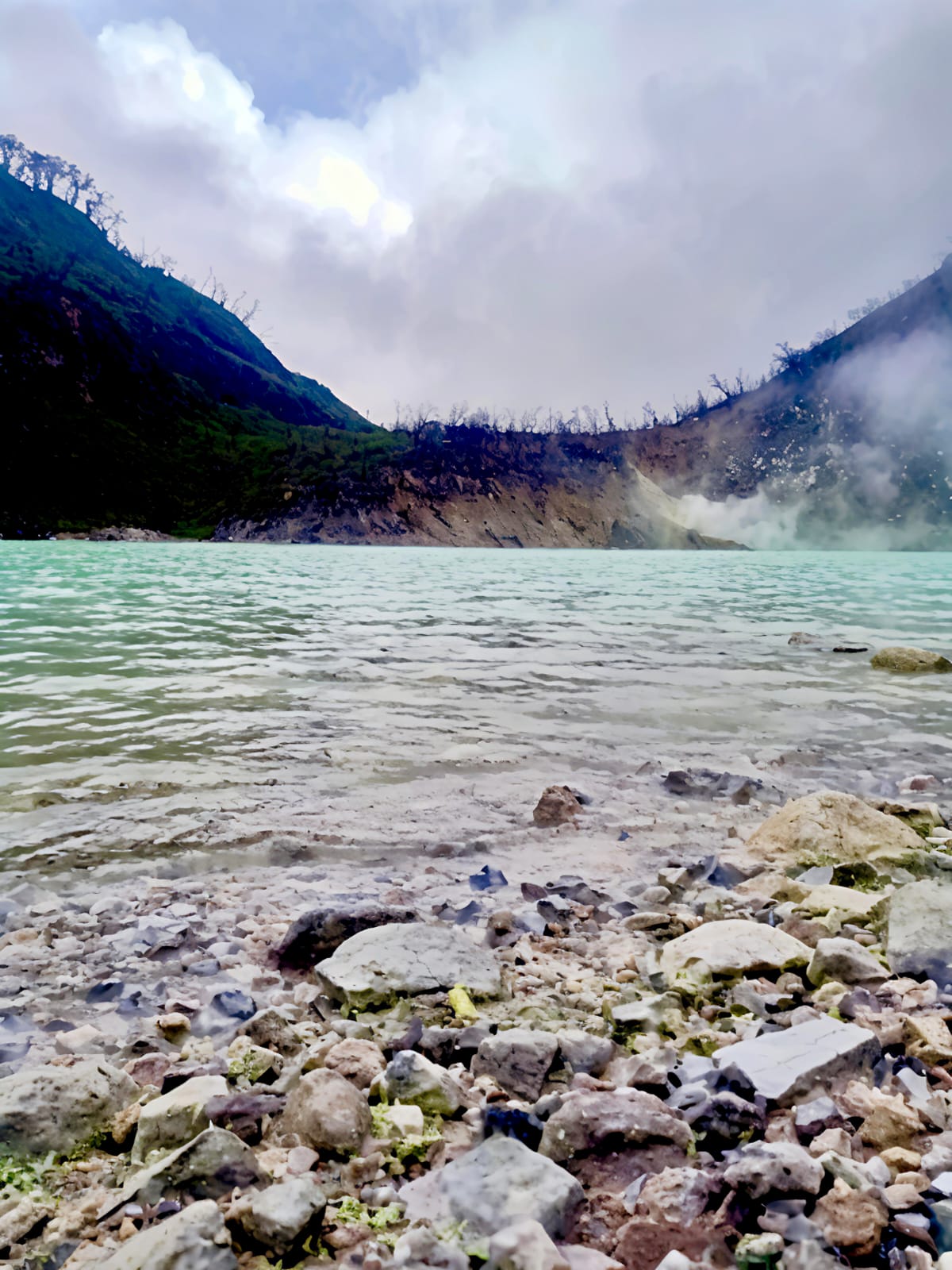
From a distance, the lake appears almost unreal — a milky turquoise pool cradled by jagged limestone cliffs, its surface often veiled in mist that rolls in without warning. The water isn’t artificially colored or digitally enhanced — its striking hue comes from high concentrations of sulfur, reacting with minerals under the surface, creating shades that shift daily: from emerald green at dawn to ghostly silver under overcast skies.
This is not a manicured tourist spot. It’s raw. Alive. And deeply atmospheric.
The name Kawah Putih means “White Crater” in Indonesian — named not for the water, but for the pale, chalk-like deposits that line its rim, bleached by centuries of volcanic gas. As you descend the winding path toward the lake, the air carries a faint scent of sulfur — a reminder that you’re walking above an active system, one that whispers rather than roars.
A Landscape Shaped by Fire
Kawah Putih is part of Mount Patuha, a dormant volcano whose last major eruption was centuries ago. But still, the ground remembers. Fumaroles hiss steam from hidden vents, and the lake itself acts as a natural pH indicator — acidic enough to limit plant life nearby, yet surrounded by patches of hardy pine and eucalyptus that cling to the slopes.
What makes this place truly unique is its transience. Unlike static lakes, Kawah Putih changes. After heavy rain, the water level rises and the color softens. In dry seasons, mineral deposits become more visible, turning parts of the shore into otherworldly white terraces. Locals once believed the lake had mystical powers — some said it could grant wishes; others warned it should only be visited with respect.
Today, visitors walk along wooden boardwalks that guide them safely to the edge, offering unobstructed views without disturbing the fragile ecosystem. There are no loud speakers, no souvenir stalls crowding the view — just quiet paths, cool mountain air, and moments of unexpected stillness.
More Than a Photo Stop
Yes, Kawah Putih is iconic — and yes, it’s photogenic from every angle. But what resonates most with travelers who slow down is the sense of contrast: fire and water, destruction and beauty, danger and serenity. It’s a place that invites reflection, not just documentation.
For hikers, there are gentle trails around the rim offering panoramic views. For those drawn to geology, it’s a rare chance to witness volcanic chemistry in action. And for anyone seeking something beyond the usual “must-see” list, Kawah Putih delivers not just scenery, but a feeling — like standing at the edge of an ancient secret.
There’s no need to rush here.
Sit for a while. Watch the mist rise.
Let the silence do the talking.
x
Tucked into the highlands of Ciwidey, 50 kilometers south of Bandung, lies Kawah Putih — a place where science, myth, and surreal beauty converge. This volcanic crater lake isn’t just another stop on the map; it’s a living landscape, shifting in color with the wind, the light, and the breath of the earth beneath.
From a distance, the lake appears almost unreal — a milky turquoise pool cradled by jagged limestone cliffs, its surface often veiled in mist that rolls in without warning. The water isn’t artificially colored or digitally enhanced — its striking hue comes from high concentrations of sulfur, reacting with minerals under the surface, creating shades that shift daily: from emerald green at dawn to ghostly silver under overcast skies.
This is not a manicured tourist spot. It’s raw. Alive. And deeply atmospheric.
The name Kawah Putih means “White Crater” in Indonesian — named not for the water, but for the pale, chalk-like deposits that line its rim, bleached by centuries of volcanic gas. As you descend the winding path toward the lake, the air carries a faint scent of sulfur — a reminder that you’re walking above an active system, one that whispers rather than roars.
A Landscape Shaped by Fire
Kawah Putih is part of Mount Patuha, a dormant volcano whose last major eruption was centuries ago. But still, the ground remembers. Fumaroles hiss steam from hidden vents, and the lake itself acts as a natural pH indicator — acidic enough to limit plant life nearby, yet surrounded by patches of hardy pine and eucalyptus that cling to the slopes.
What makes this place truly unique is its transience. Unlike static lakes, Kawah Putih changes. After heavy rain, the water level rises and the color softens. In dry seasons, mineral deposits become more visible, turning parts of the shore into otherworldly white terraces. Locals once believed the lake had mystical powers — some said it could grant wishes; others warned it should only be visited with respect.
Today, visitors walk along wooden boardwalks that guide them safely to the edge, offering unobstructed views without disturbing the fragile ecosystem. There are no loud speakers, no souvenir stalls crowding the view — just quiet paths, cool mountain air, and moments of unexpected stillness.
More Than a Photo Stop
Yes, Kawah Putih is iconic — and yes, it’s photogenic from every angle. But what resonates most with travelers who slow down is the sense of contrast: fire and water, destruction and beauty, danger and serenity. It’s a place that invites reflection, not just documentation.
For hikers, there are gentle trails around the rim offering panoramic views. For those drawn to geology, it’s a rare chance to witness volcanic chemistry in action. And for anyone seeking something beyond the usual “must-see” list, Kawah Putih delivers not just scenery, but a feeling — like standing at the edge of an ancient secret.
There’s no need to rush here.
Sit for a while. Watch the mist rise.
Let the silence do the talking.


