
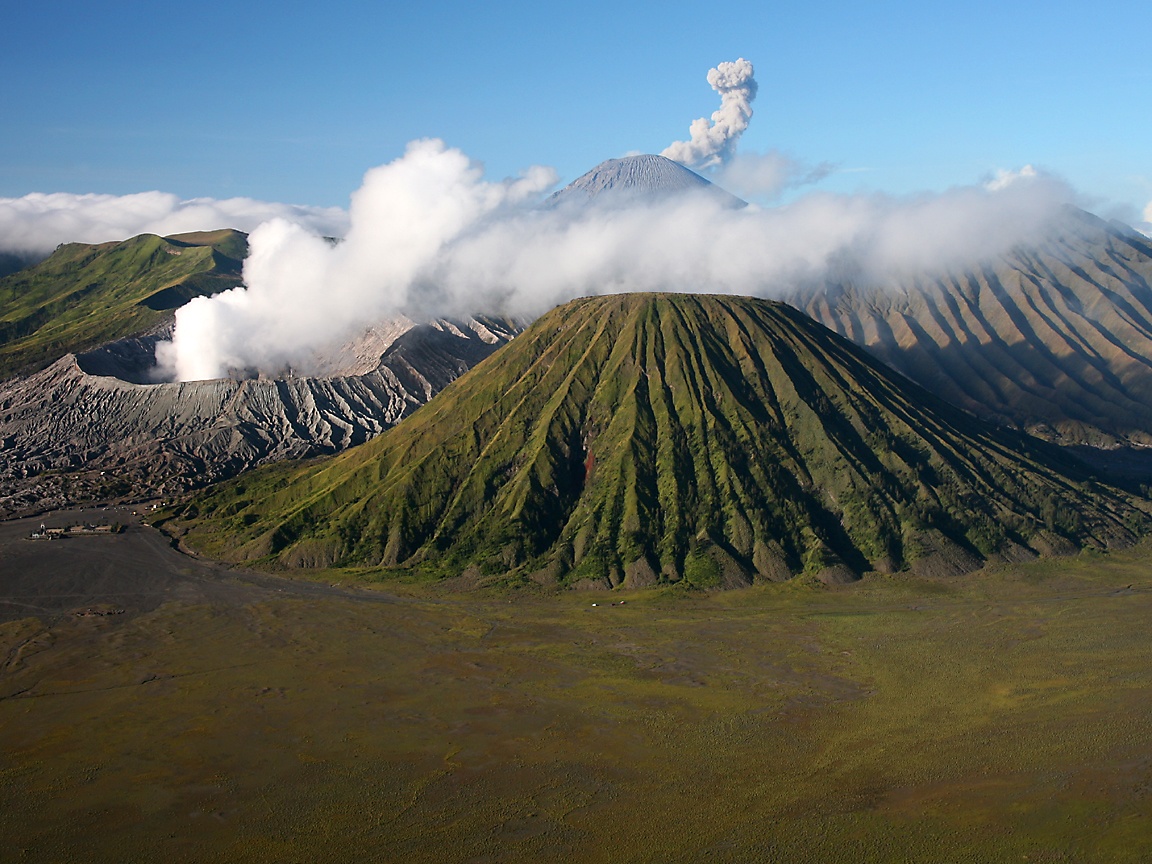
Bromo Tengger Semeru National Park: A Geological and Cultural Landscape in East Java
Bromo Tengger Semeru National Park (TNBTS) is one of Indonesia’s most iconic protected areas, covering 50,276 hectares across four regencies in East Java: Probolinggo, Pasuruan, Malang, and Lumajang. Established in 1982, it is managed by the Ministry of Environment and Forestry and designated as a UNESCO Biosphere Reserve candidate since 2021.
The park is defined by three major features:
- Mount Bromo (2,329 m): an active cinder cone volcano, part of the larger Tengger Caldera
- Mount Semeru (3,676 m): Java’s highest peak and most active volcano
- The Tengger Caldera (10 km wide): a vast sand sea (Laut Pasir) inhabited by the Tengger people, one of Java’s few surviving Hindu communities
Unlike Bali or Lombok, TNBTS is not a beach destination. It is a highland volcanic ecosystem where geology, culture, and conservation intersect.
Key Access Points
| Cemoro Lawang | Probolinggo | ~2.5 hrs | Sunrise views of Bromo, Laut Pasir access |
| Ngadisari | Pasuruan | ~2 hrs | Trekking to Penanjakan 1 (higher vantage point) |
| Ranupani | Lumajang | ~3 hrs | Base for Semeru ascents (requires permit) |
Note: Private vehicles can reach Cemoro Lawang and Ngadisari. Beyond gate checkpoints, only local jeeps (IDR 500,000–700,000 per vehicle, 4–6 pax) are permitted due to sandy terrain.
Mount Bromo: Practical Information
- Elevation: 2,329 m above sea level
- Activity Level: Moderate (5–10 min walk from jeep drop-off to crater rim; stairs are steep but short)
- Best Time to Visit: April–October (dry season); avoid November–March due to frequent fog and rain
- Sunrise Viewing: Start at 3:30–4:00 AM from Cemoro Lawang. Penanjakan 1 (2,770 m) offers the widest panorama but requires earlier departure (2:30 AM).
- Entrance Fee (2025):
- Domestic: IDR 27,500 (weekday), IDR 32,500 (weekend/holiday)
- Foreign: IDR 220,000 (any day) — includes park entry + Bromo access
- Infrastructure: Concrete viewing platforms, safety railings (installed 2023), public toilets, basic food stalls. No lodging at crater rim.
🔍 Volcanic Status (PVMBG, Nov 2025): Bromo remains at Level II (Waspada). Minor ash emissions occurred in August 2025; no impact on tourism. Real-time alerts available via Magma Indonesia app.
The Tengger People: Cultural Context
An estimated 12,000 Tengger Hindus live in 30 villages within the caldera. Their identity is preserved through:
- Yadnya Kasada: Annual ritual (July) where offerings are thrown into Bromo’s crater
- Agricultural Practices: Terrace farming of potatoes, cabbage, and garlic on volcanic slopes
- Language: Tengger dialect — a variant of Javanese with archaic vocabulary
Visitors are welcome to observe daily life, but photography during ceremonies requires explicit permission. Homestays in Ngadisari and Wonokitri offer cultural immersion (IDR 250,000–400,000/night, includes breakfast).
Travel Tips for European Visitors
- Altitude: Cemoro Lawang sits at 2,200 m — mild altitude effects possible (headache, shortness of breath). Acclimatize in Malang (500 m) first if sensitive.
- Temperature: 5–15°C at dawn; 18–22°C midday. Wind chill on caldera can be significant — bring thermal layers.
- Connectivity: Limited 4G signal in Cemoro Lawang (Telkomsel only). Download offline maps.
- Sustainability: Plastic bags banned in the park since 2024. Reusable water bottles recommended; refill points available at ranger posts.
Permits & Regulations
- Bromo Access: Included in park entrance fee
- Semeru Ascent: Requires separate permit from Balai TNBTS (max 50 climbers/day); 2-day trek, guided only; closed during rainy season (Dec–Mar)
- Drones: Prohibited without written authorization from Ministry of Forestry


